

Thickeners
Your Professional Thickeners Supplier!
Guangdong Sanhe Daily Chemical Industry Co., Ltd.(Short for "Sanhe Daily"), established in 2024, a service platform company integrating raw materials research and development, formula application development, technology promotion and raw materials promotion/cosmetics OEM/ODM, etc.
A thickener is a substance which can increase the viscosity of a liquid without substantially changing its other properties.
Why Choose Us
Our products
Our products include surfactants, thickeners, conditioners, preservatives, moisturizers, film formers, natural surfactants, natural oils, essential oils, etc.
Product applications
Our products are used in scalp and hair care, body care, facial care, sunscreen care, baby care, private parts care, pet care, etc.
Production equipment
Our company has extraction equipment, fermentation equipment, essential oil extraction equipment, molecular distillation equipment, and synthetic compound production equipment.
OEM/ODM service
Our team of experts will work closely with you to understand your needs and provide customized solutions that meet your expectations.


Advantages of thickeners
Controlled viscosity:
The main property of thickeners is to control the viscosity of the adhesive, allowing for more precise application and preventing unwanted drips.
Improve texture and mouthfeel:
Thickeners can increase the viscosity and stickiness of a product, improving its texture and giving it more mouthfeel and flavor.
Provide stability:
Thickeners enhance product stability, prevent separation and sedimentation, and extend product shelf life.
Promote suspension and emulsification:
Some thickeners can form stable suspensions or emulsions in liquids, allowing them to distribute evenly and provide better flavor and texture.
Cost savings:
By using thickeners, the raw material consumption of its products can be reduced, thus achieving savings in production costs.
Innovation:
The use of thickeners can create new textures, structures and tastes for products, providing more product choices and changes.
Application of thickeners
Food industry:
It is used to improve the viscosity of the material system, keep the material system in a uniform and stable suspension or milky state, or form gel, which is also called paste or food glue in food.
Cosmetics industry:
The viscosity or consistency of products can be adjusted to improve their texture and user experience.
In the field of detergents, it helps to adjust the viscosity of detergents, making them easier to operate and control during use.
Printing and dyeing industry:
Widely used in the printing and dyeing process, such as improving the rheological properties of printing and dyeing pulp, enhancing the quality and effectiveness of printing and dyeing.
Coatings and adhesive industry:
Paint requires rheological agents to increase viscosity, and associative thickeners are similar to surfactants in that they also have hydrophobic and hydrophilic end groups and side chains, which May result in the formation of micelles leading to increased viscosity. Unlike thickeners that only function through swelling, associative thickeners interact with latex particles and connect them through micelle bridges. It also plays a role in adjusting viscosity and other properties in adhesives.
Pharmaceutical field:
It can be used in the pharmaceutical process, such as adjusting the viscosity in some liquid preparations to meet different drug needs.
Petroleum drilling:
In petroleum drilling engineering, thickeners can be used to adjust the viscosity and other properties of drilling fluids to ensure the smooth progress of the drilling process.
Types of Thickeners
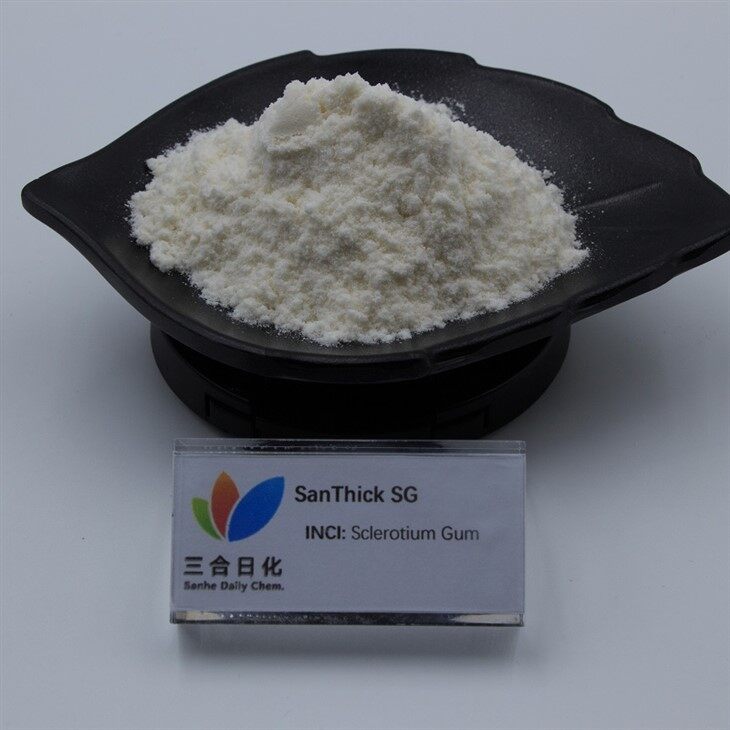
Natural thickeners:
They are derived from plant sources. They offer versatile thickening properties.These include gums (e.g., xanthan gum, guar gum) and cellulose derivatives (e.g., hydroxyethyl cellulose).

Synthetic thickeners:
They are chemically synthesized. They help to control the rheology of formulations.These include acrylates.

Associative thickeners:
They offer multifunctional benefits, including suspension, stabilization, and emulsion modification.These include polymeric thickeners (e.g., acrylates/C10-30 alkyl acrylate crosspolymer).
Avoid contamination
To prevent contamination, it is important to use clean, dry utensils or tools when handling thickeners. Avoid using a wet or dirty spoon or spatula, which May introduce moisture or foreign particles into the container. Also, make sure the storage area is free of contaminants such as dust, insects, or chemicals that could contaminate the concentrator.
Temperature control
Thickeners should be stored at stable temperatures to maintain their properties. Extreme temperatures can cause irreversible changes in thickeners, affecting their functionality. It is best to store thickeners at room temperature, preferably between 20°c and 25°c (68°f and 77°f). Avoid exposing them to excessive heat or cold, as this May cause degradation or changes in the molecular structure of the thickener.
Dry and cool environment
Moisture can cause thickeners to clump or degrade, resulting in a loss of effectiveness. Therefore, it is recommended to store the thickener in an airtight container or airtight bag to protect it from moisture. Additionally, storing them in a cool area away from direct sunlight can help prevent heat-induced degradation.
Correct packaging
Thickeners are best stored in original, sealed containers that provide adequate protection against moisture, air, and light. If the original packaging is damaged or unsuitable for long-term storage, transferring the thickener to an airtight, opaque container made of a material such as glass or high-density polyethylene (HDPE) will help maintain its stability.
Labels and rotations
To ensure proper use and minimize waste, each container must be labeled with the thickener name, batch number and date of receipt. This information helps track inventory and implement first-in, first-out (FIFO) rotation, ensuring that older batches are used before newer batches.
FAQ
We're professional thickeners suppliers in China, specialized in providing high quality products with low price. Please rest assured to buy customized thickeners made in China here from our factory. For free sample, contact us now.